
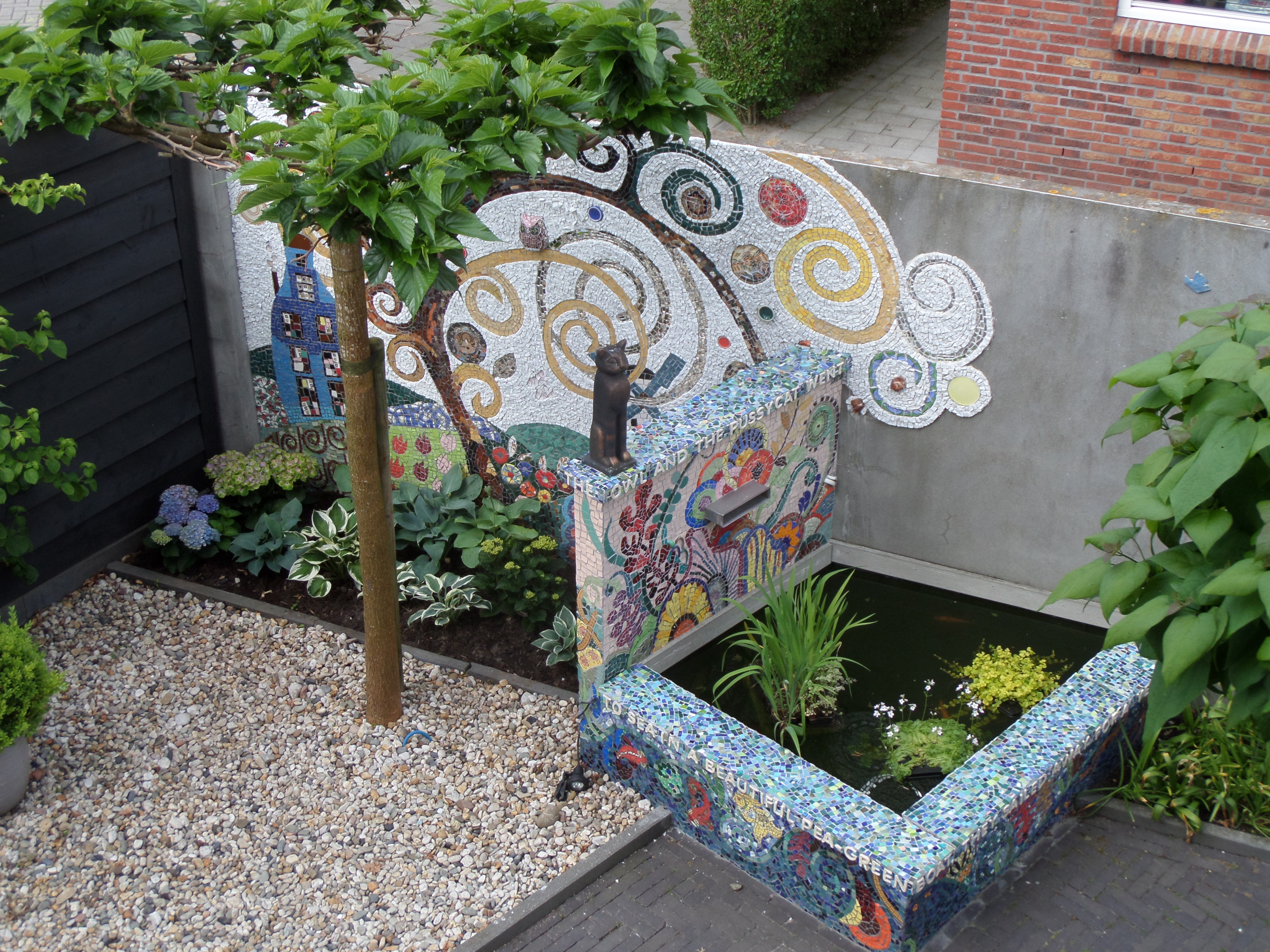
I had a wall in my backyard in the Netherlands, which my neighbors called the Berlin Wall. I must say I was rather surprised to hear this – yes it was large and grey and demarcated the boundary between properties. The wall was fourteen meters long.
When we moved in, I thought that the wall was perfect for a mosaicing project and it wasn’t long before I got to work. It took me some time to decide what to put on it. I have had several people ask me to document my progress – so here’s the first installment.
I wanted to design something with a slightly Dutch theme. Eventually I decided to base the wall on one of my favorite childhood stories – The Owl and the Pussy-cat by Edward Lear, written in 1871.
So I set about drawing my design and got to work. The key elements of the design were the Bong-tree, the owl, the pussy-cat, the boat and the moon. Each of these elements will figure in the design.
I had shipped from New Zealand five large boxes of broken china, an assortment of blues, greens, reds and browns (collected post Christchurch earthquakes). I chose to use china because the frosts here in the Netherlands play havoc with the glaze on wall tiles. The water freezes on the tiles and eventually causes the glaze to blow off.
So I got to work sorting out my boxes of china and cutting pieces to size. I began with the pond. I had to drain the pond which was a ruiance as itwas about a meter and a half deep and the home to several toads.
My color scheme is entirely based on the china I had available to me, guesstimating at the quantities of appropriate materials. In a couple of areas I have used red smalti to add depth of color to the piece. I have placed my initials in the top left hand corner using two brass letters discarded from an old headstone.
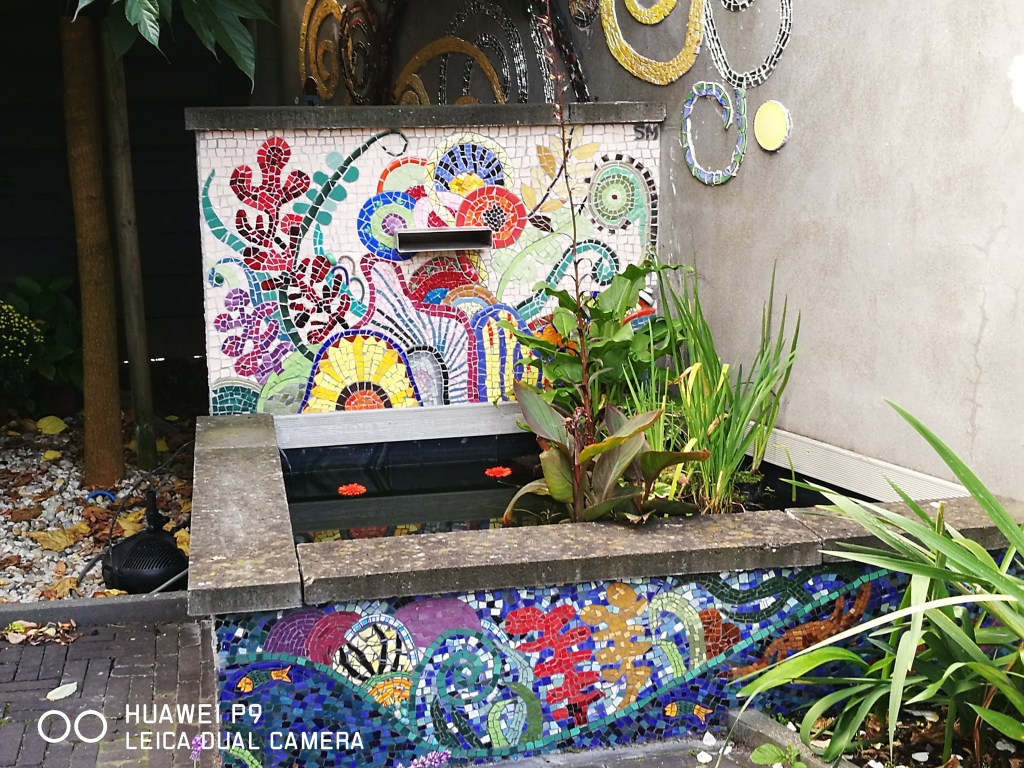
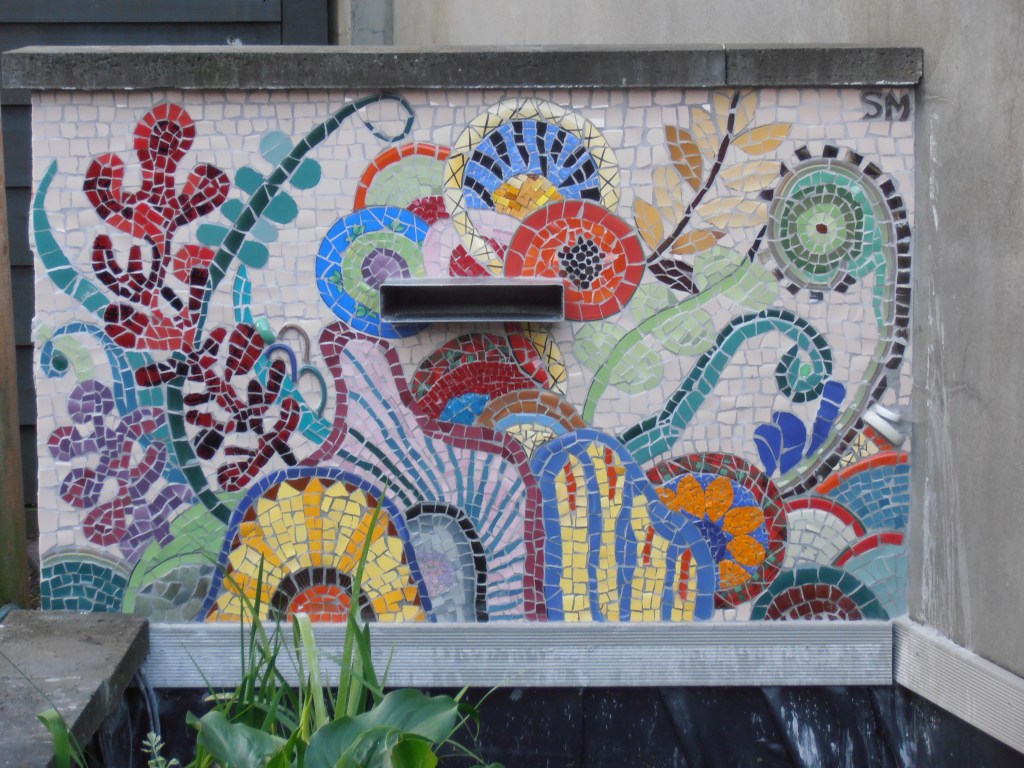
I completed the pond by adding the words of the poem in ceramic letters and of course the cat. The intention was for the rest of the poem (i.e. verse II) to flow into the main wall behind. Next summer’s project.
For the main wall I needed a design that went with the poem as well as incorporated a Dutch theme so I decided to design using two inspiration points: Gustav Klimt’s tree of life and Karla Gerard’s sunny landscape paintings. Using those, I developed my own design incorporating Dutch bulb fields, a windmill and an Amsterdam house. The bong-tree forms the main focus of the wall so that’s where I began. As I progressed down the wall, I added the moon, the owl and pussy-cat and other elements as well.
For the branches of the Bong-tree I used a mixture of china and mirror as well as three different grout colors. The china areas (i.e. the image itself) were grouted before any of the background went in. Grouting china (which does not form a smooth flat surface) is a laborious task and was my least favourite aspect of the project.
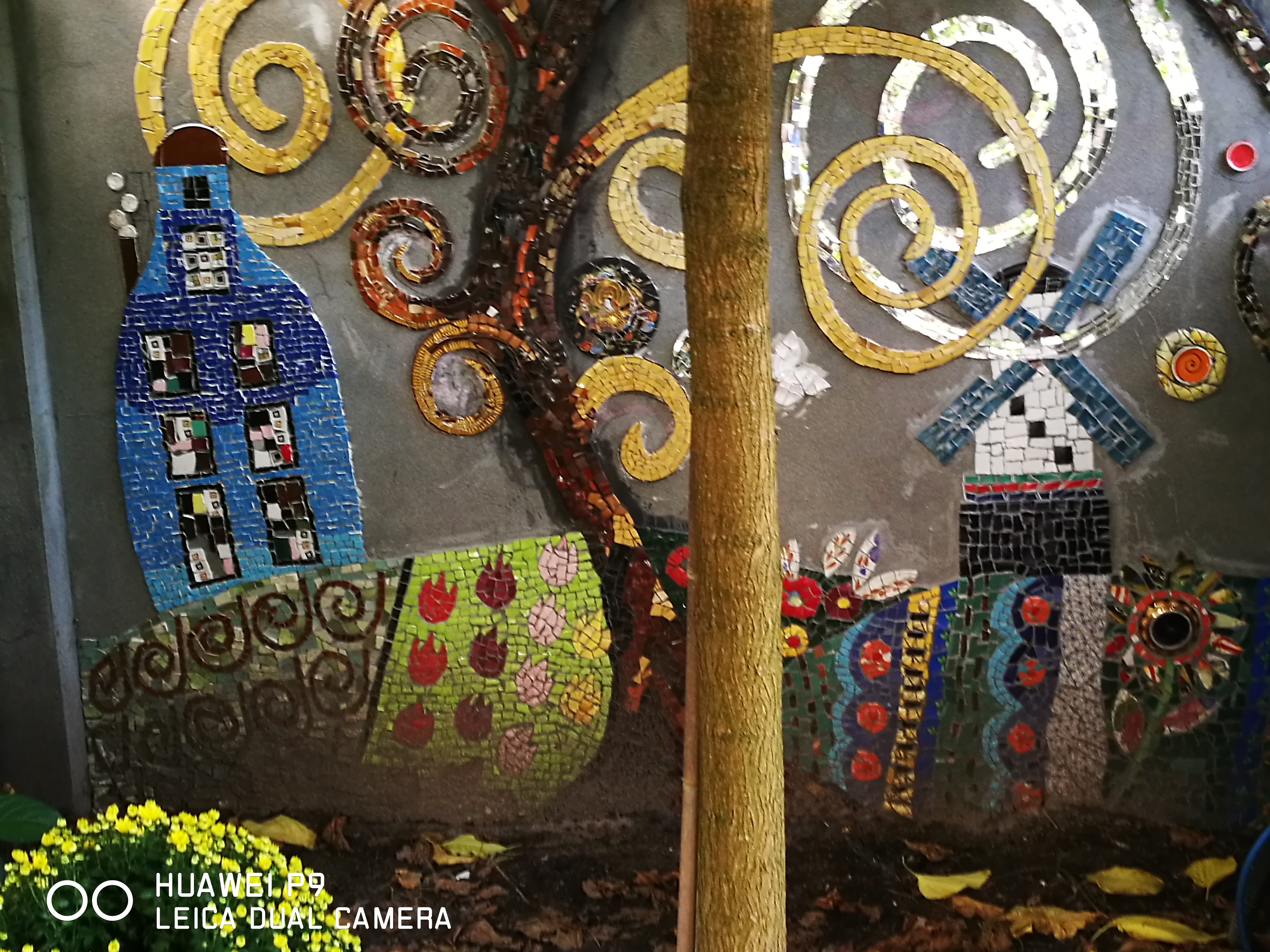
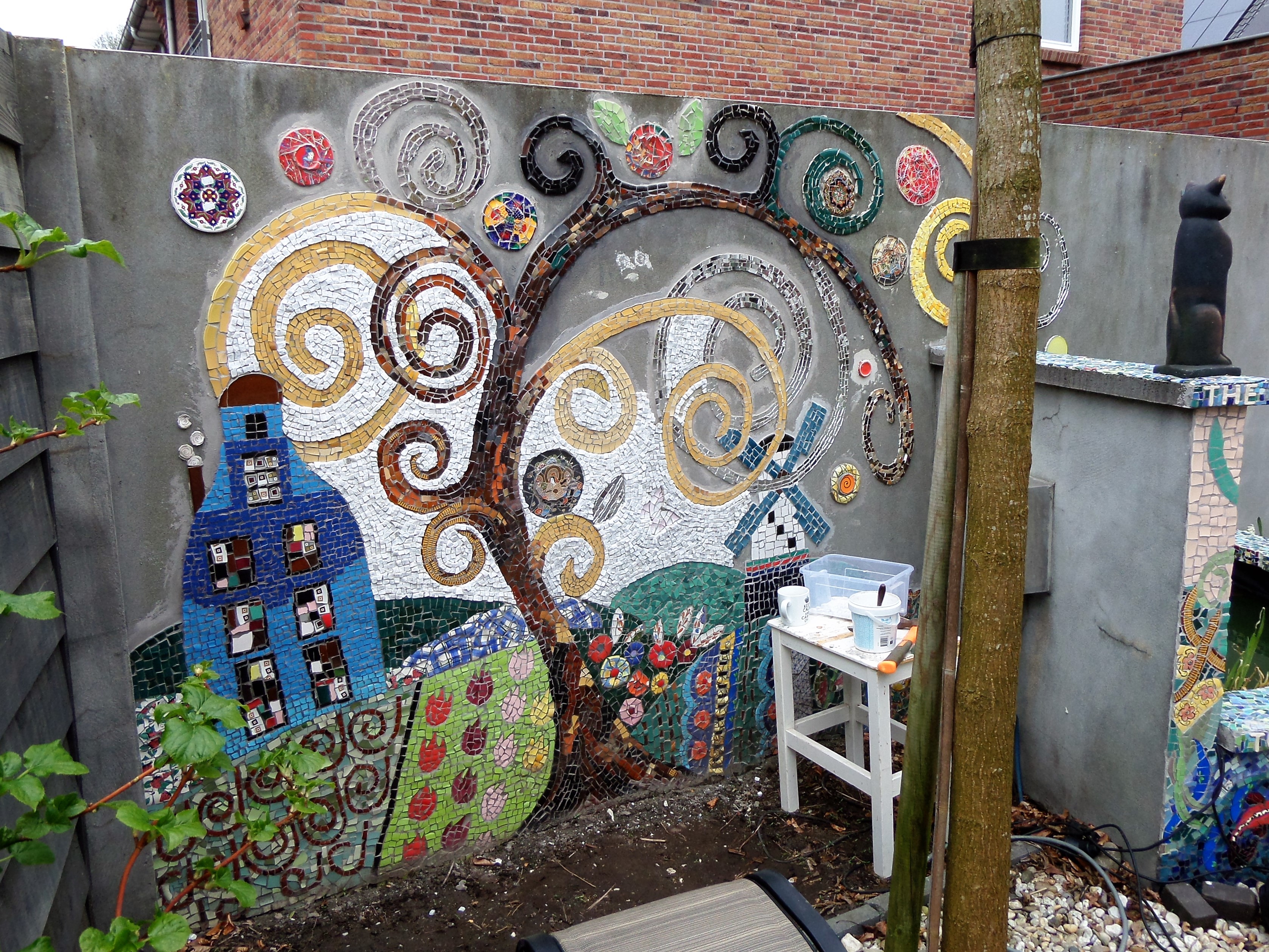
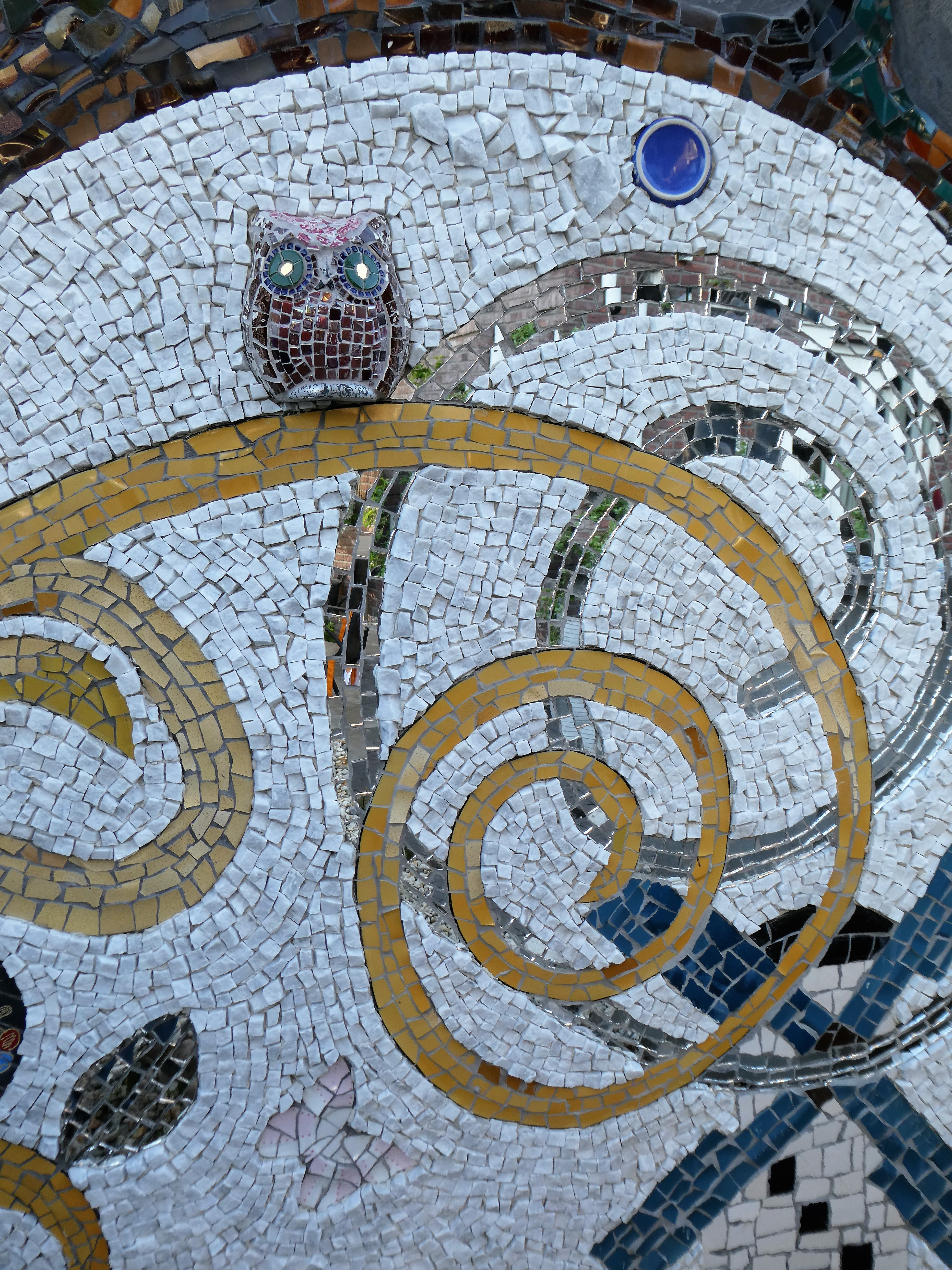
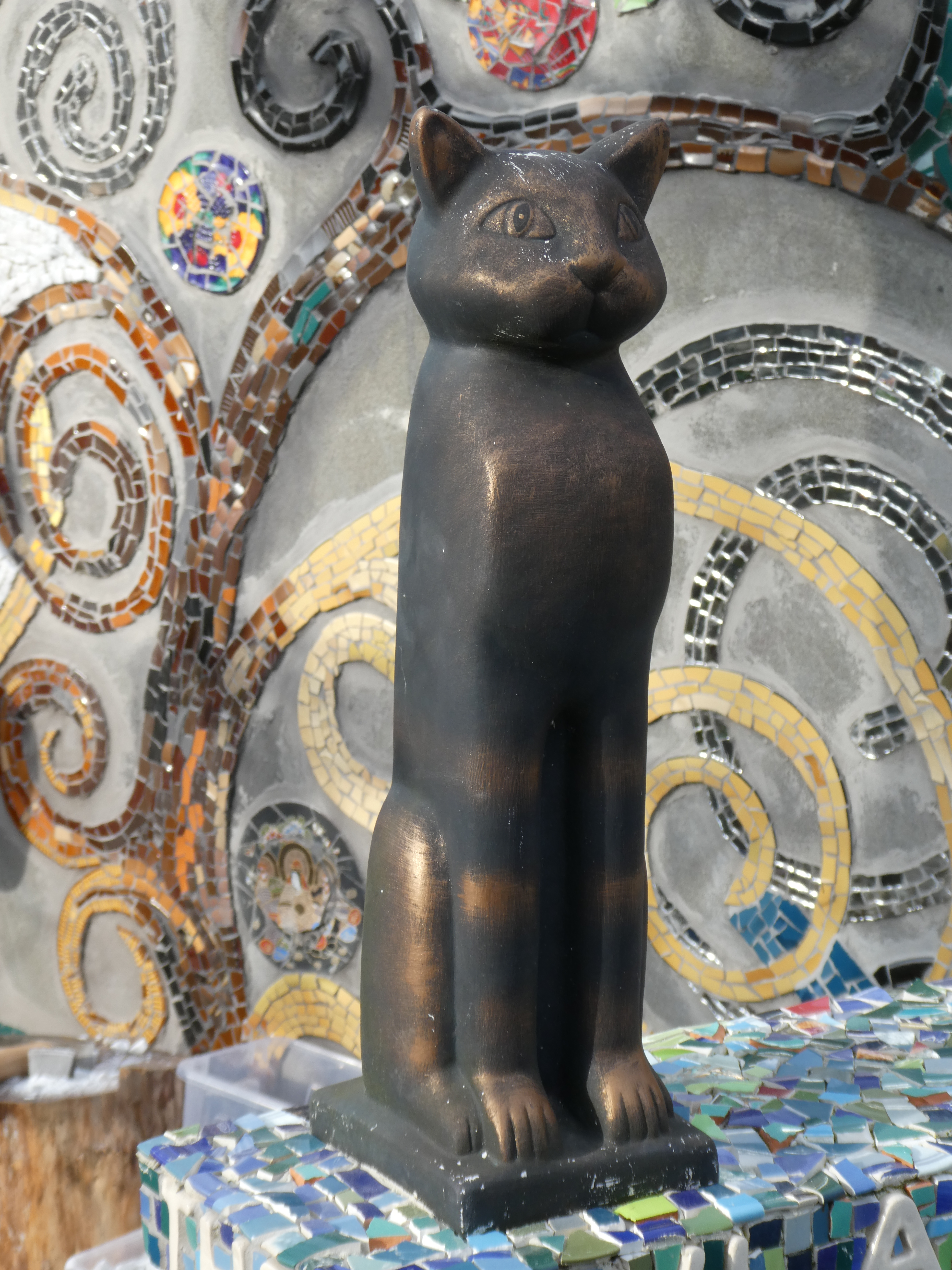
I’m now having to fill in the background. I have chosen bright white marble which I am cutting from blocks using a hammer and hardy. As you can imagine this is quite an undertaking for a 14 meter wall. But once the material is cut the process of adhering to the wall goes relatively quickly (in mosaic terms). Particularly as I am not grouting the marble. The natural quartz in the marble reflects the sunlight adding a special quality to the piece. Its amazing to see the wall and image come to life as the background marble goes into place. Both china and marble do not produce neat uniform shapes so there is a sense of freedom in the piece. It is not a tight perfect fit.
contact@sarahsartdiary.com

 Sarah's Art Diary
Fabulous amazing and beautiful what a work of art .
You look so rested and very radiant xxx
So happy for you to see you so content with your art .
LikeLike
Thanks Susan. Enjoying my new found freedom but have not forgotten those still struggling with earthquake issues.
LikeLike
Was so lovely to see you and the completed project last week Sarah!
LikeLike