
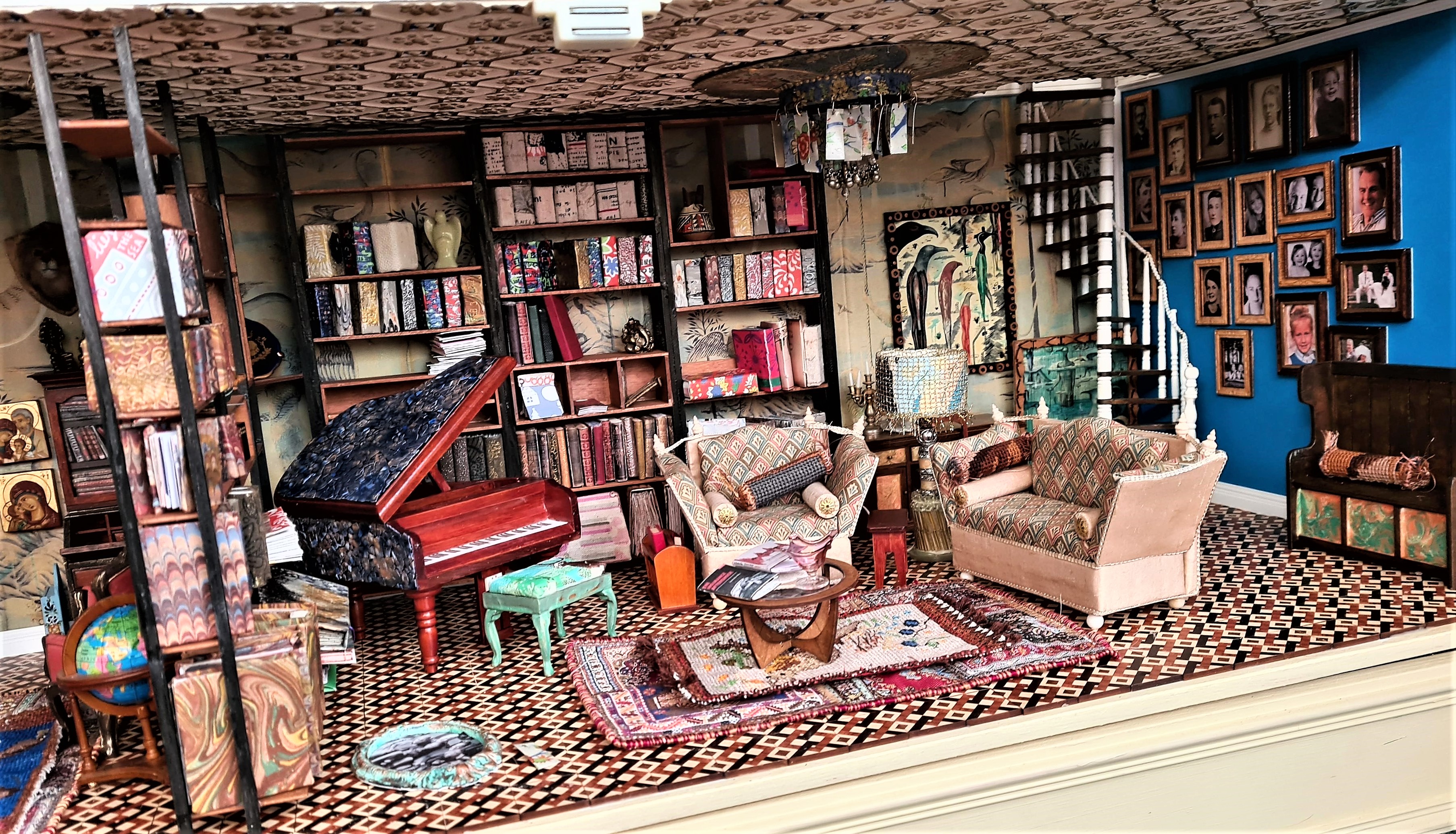
Bloomsbury House was inspired by the Bloomsbury artists and designers of the early 1900s. They were influenced by Italian Renaissance frescoes and 18th-century neo-classical interiors. They also drew from Portuguese tiles and Cézanne’s proto-cubist abstractions. Influence came from the fauvists’ colour experiments, English arts and crafts motifs, and the pure geometric forms of Islamic design. In 1913, Vanessa Bell, Roger Fry and Duncan Grant founded the Omega workshop. They set about designing furniture, carpets, and textiles. They also designed ceramics, mirrors, and light-fittings. The Omega’s liberated modern style became hugely influential in the following decades. It is still influential today and I have endeavored to repeat that aesthetic in Bloomsbury House.
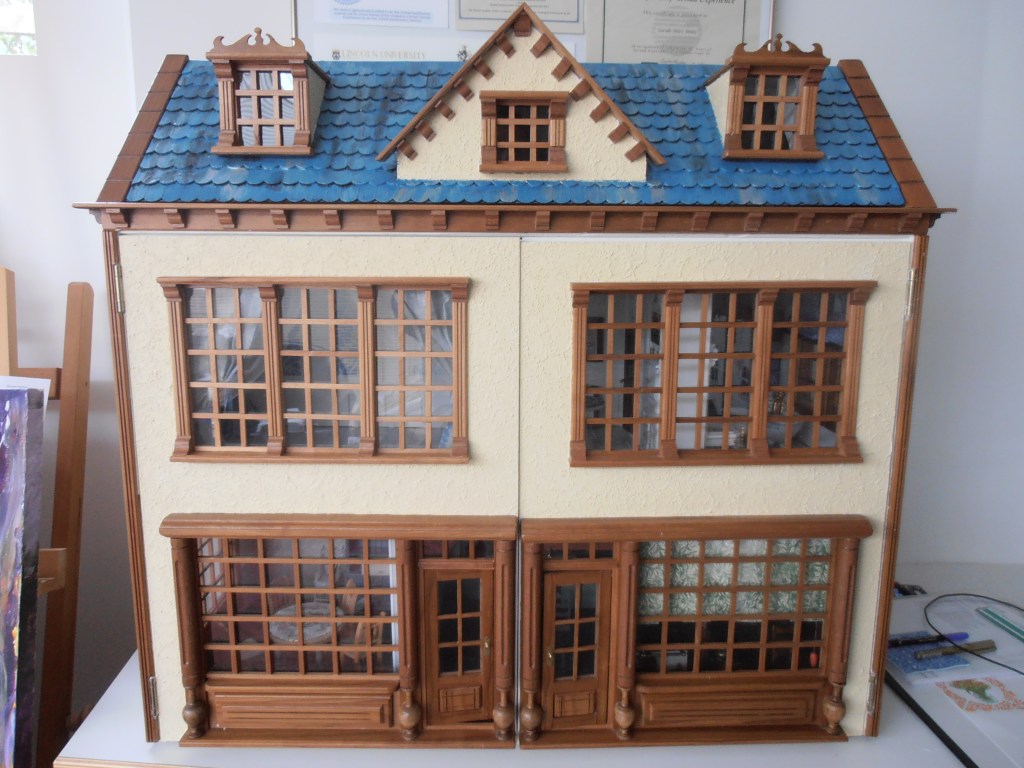
My Bloomsbury House began as a two story house (see photo above). A carpenter built it for his wife in the small village of Monster in the Netherlands.
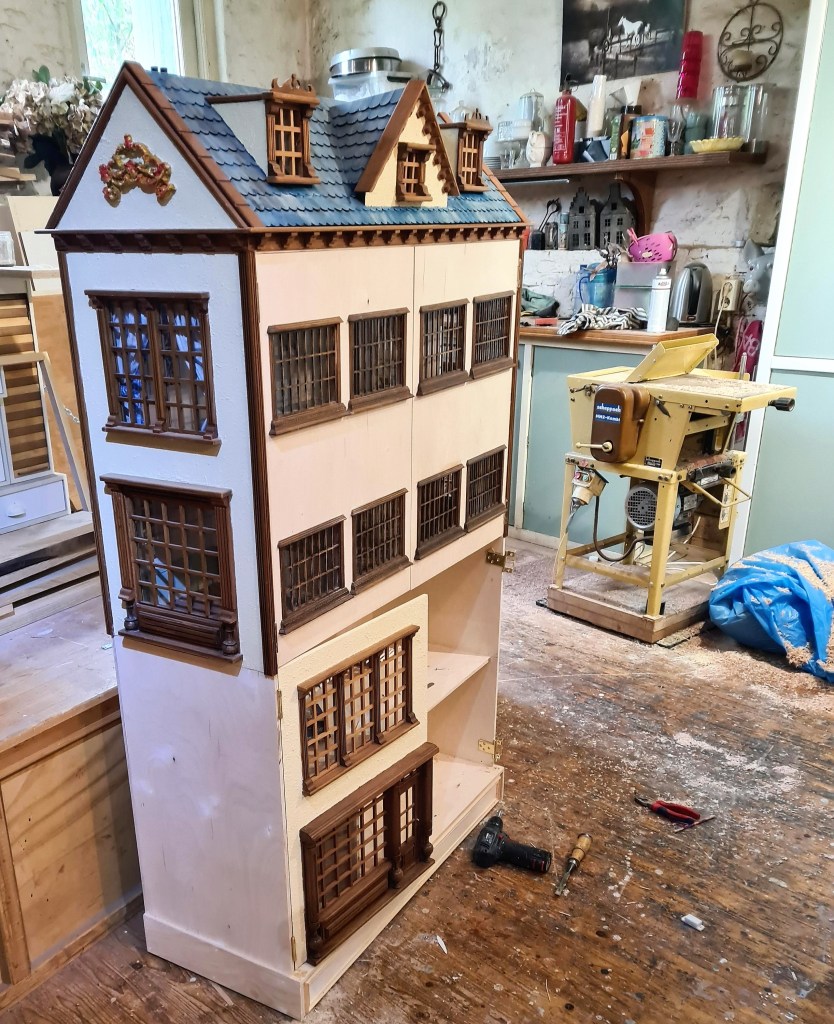
When I bought the house, the inside was bare. He had tiled the upper floor with tiles that were rather large and not to scale. They were a bland grey. The bottom floor was covered with lovely terracotta tiles. I kept them in place. Eventually, I created the kitchen area there. The rooms are 90 x 35 cm. There was no partitioning of room spaces. This lack of partitioning was one of the things that drew me to the house in the first instance. I wanted decent sized rooms so I could decorate and fill to my pleasure. Still, it was not long before I decided. The house was not going to be big enough for my grand design. I started thinking about how I could increase the size of the house. Then, I began to search for someone who could bring my vision to life. I found a carpenter via a friend in Amersfoort, The Netherlands. His name was Jan Landsjeer. He built two more floors for me. He also added a draw on wheels at the base for storage. This made it easy to manoeuvre.
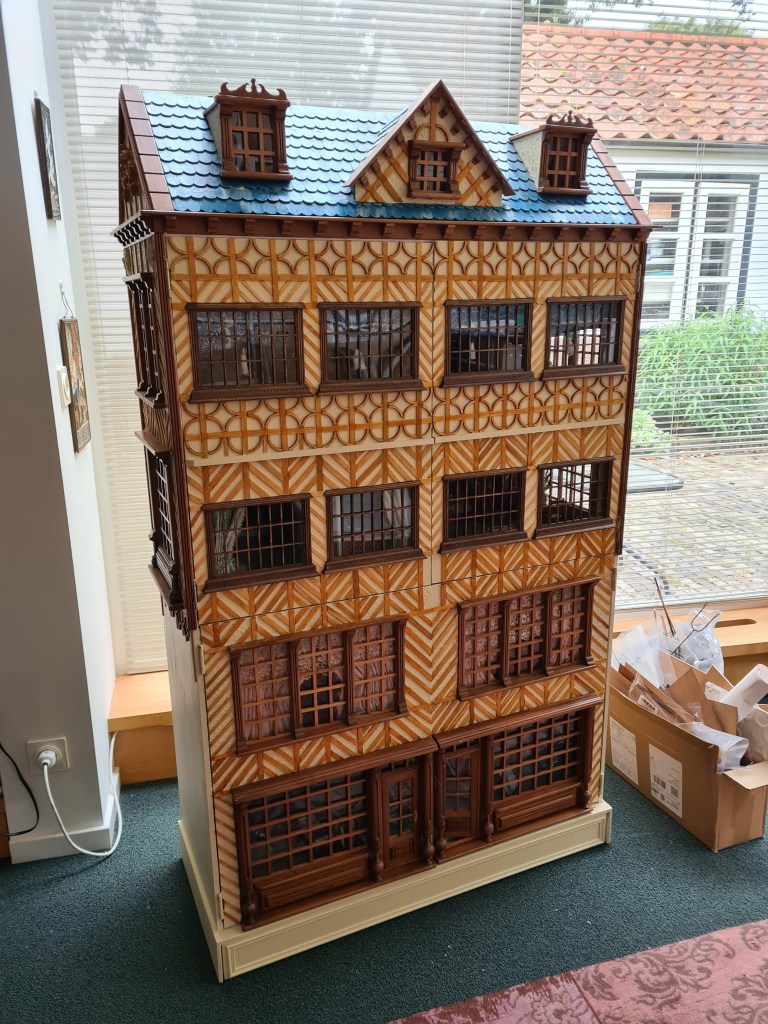
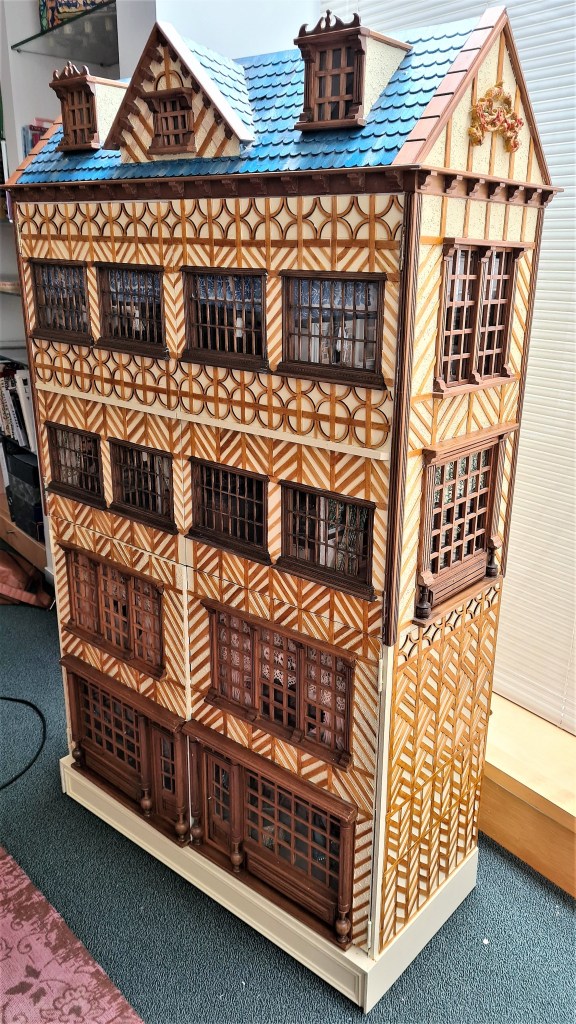
I provided him with the windows which I tried to match to the general style of the house. This was hard to do. As I stood back and reflected upon what I had before me, I envisaged a Tudor style exterior. I went looking for inspiration for the exterior of the house. Something that would tie the two halves together. First of all, I thought I would brick the entire exterior. However, I was concerned that the place would end up looking very heavy. Also, it might actually be too heavy. I wanted it to remain light and airy.
After extensive research, I found Little Morton Hall in the United Kingdom. This discovery became the inspiration for the exterior. Little Morton Hall is a moated half-timbered manor house in Cheshire. The earliest parts of the house were built in about 1504–08. Successive generations constructed the rest of the house until around 1610. It is fitting to imagine changes to the internal furnishing in later generations. These would have evolved with the fashion and times. So I make no apologies for a Bloomsbury style interior in a Tudor casing.
Miniature things invite respect for their exquisite craftsmanship and the daintiness of their construction. But their appeal is much wider. They offer an alternative life. You can find diminutive cribs and teapots the size of a fingernail. There are even filigree Faberge eggs that you fit on the head of a pin. They make the impossible possible. A Rembrandt or Matisse in the living room is perfectly achievable when it’s the size of a postage stamp. Some people spend monumental amounts of money on hand-carved pieces of miniature furniture. Others invest in highly ornate miniature furnishings. These are items one would never afford at human scale. For those who have everything – they too can still get the unimaginable on a microscopic scale.
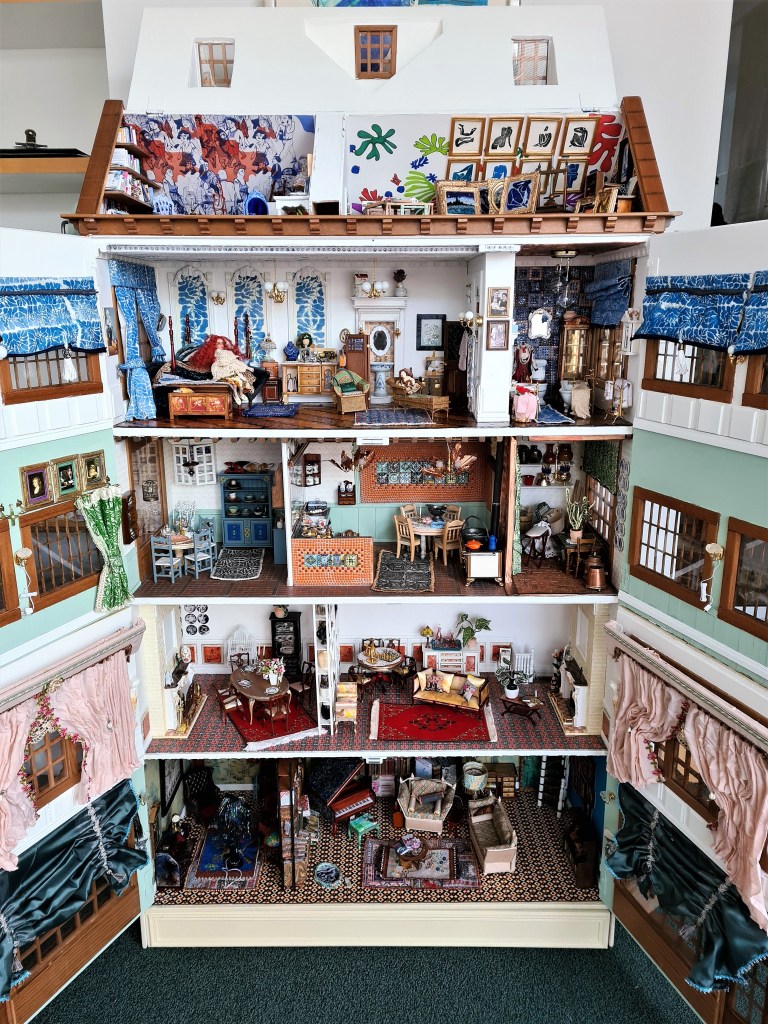
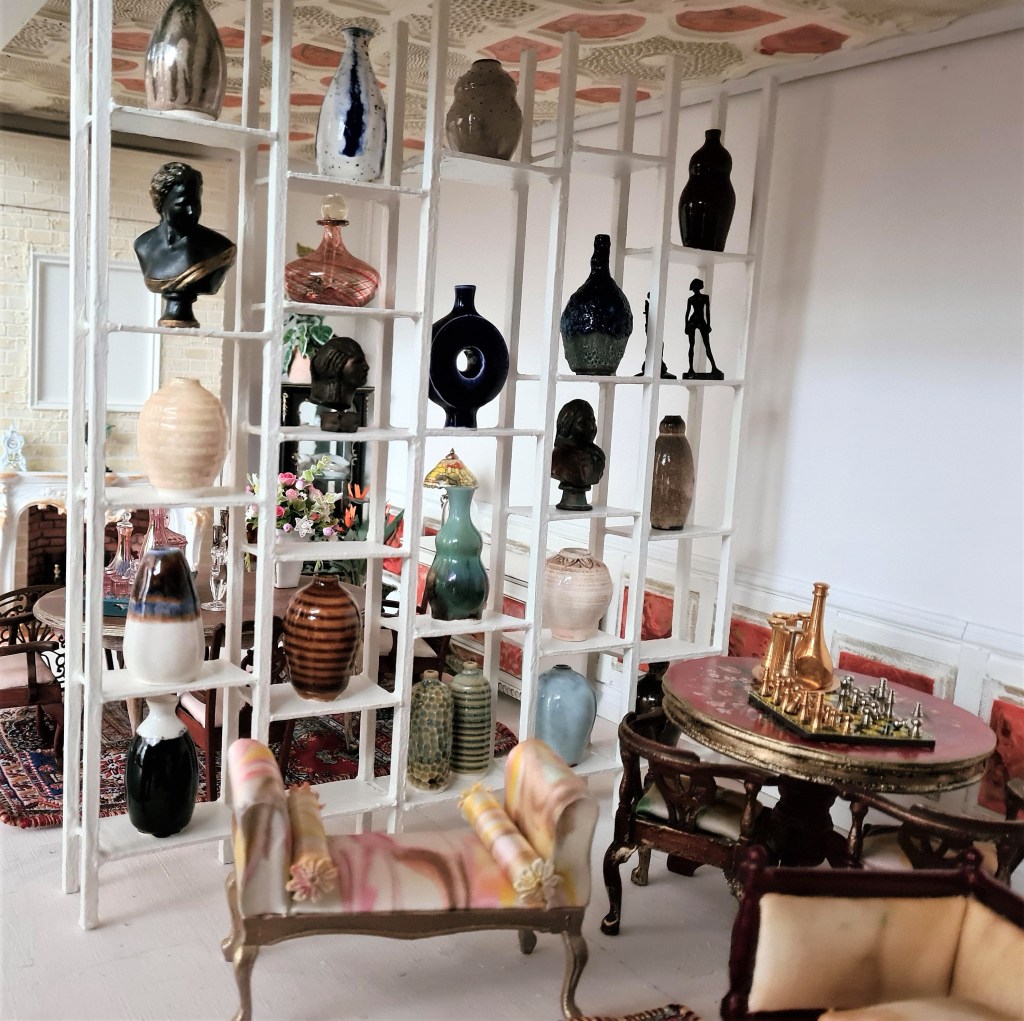
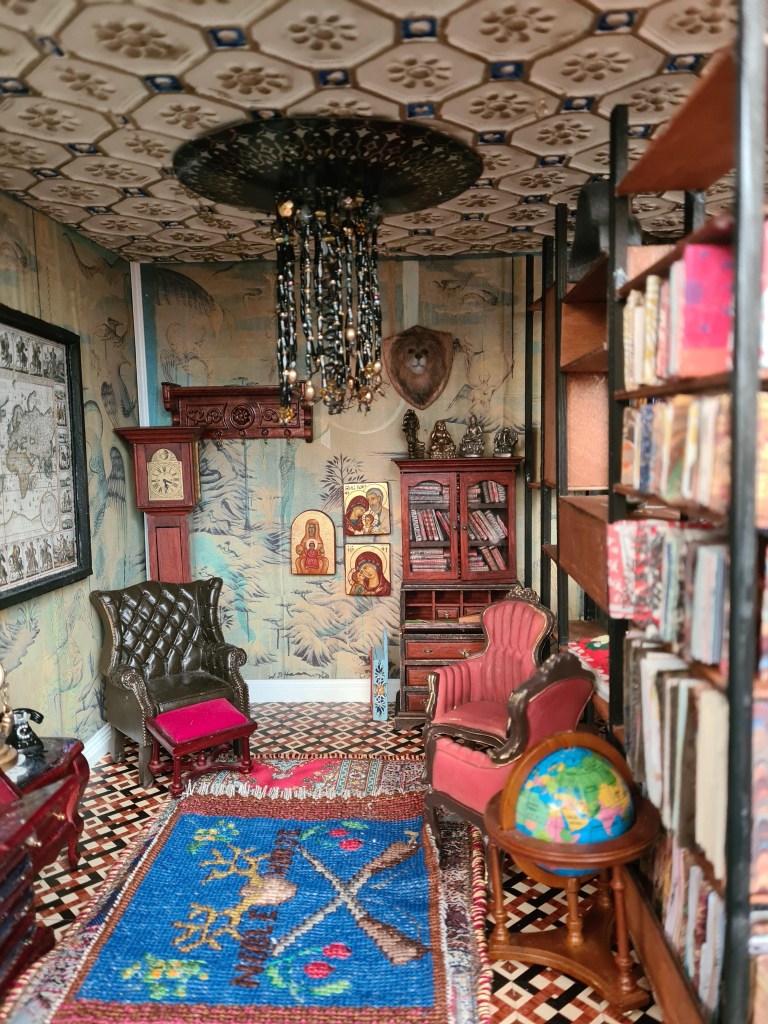
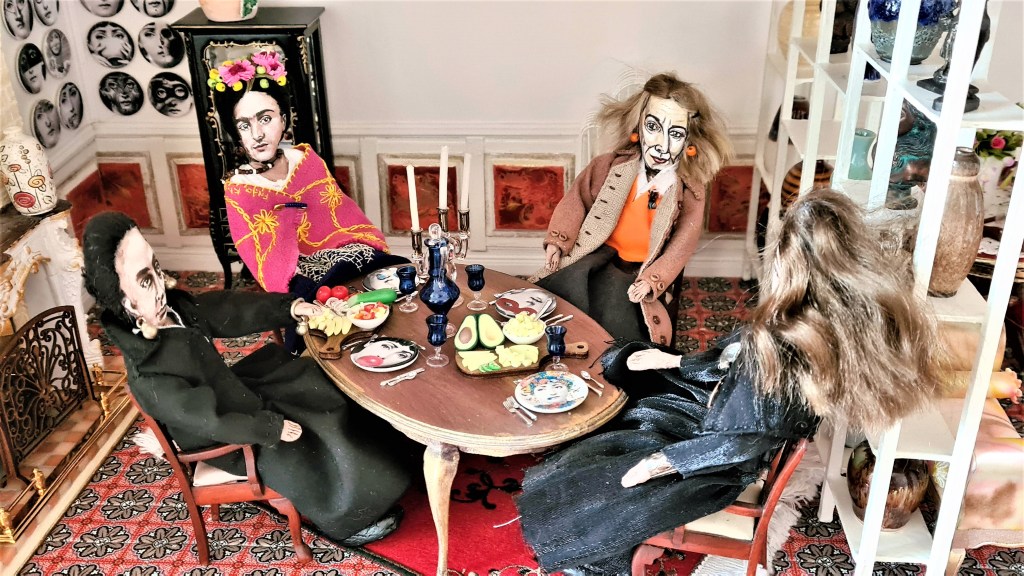
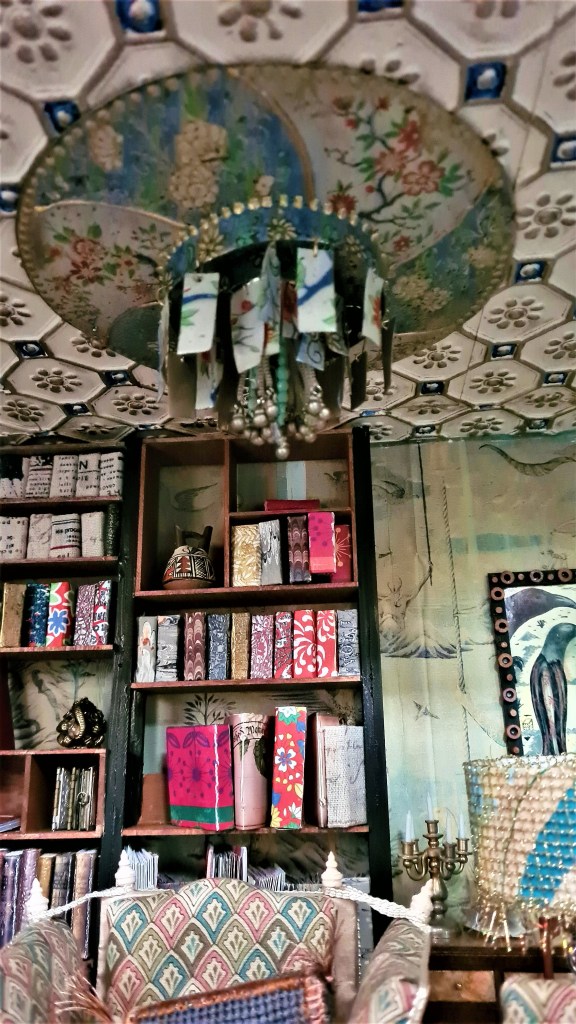
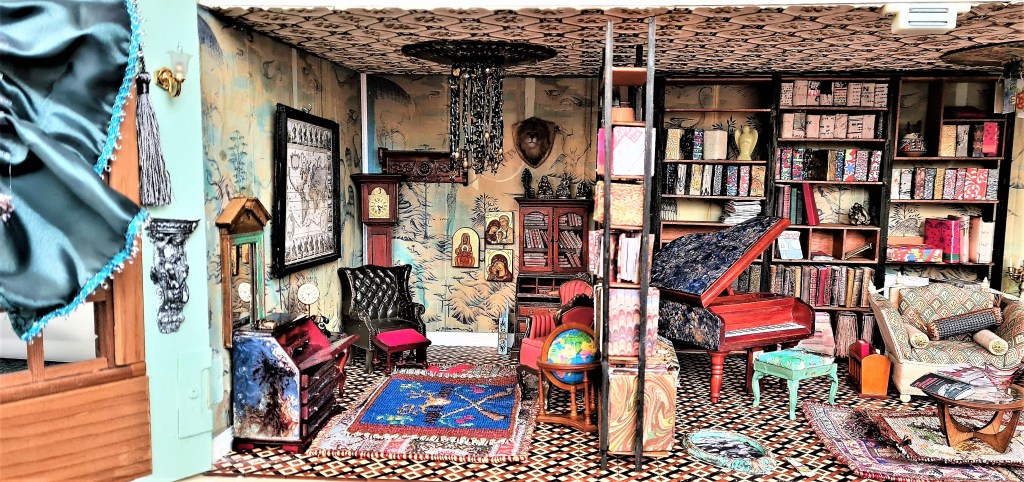
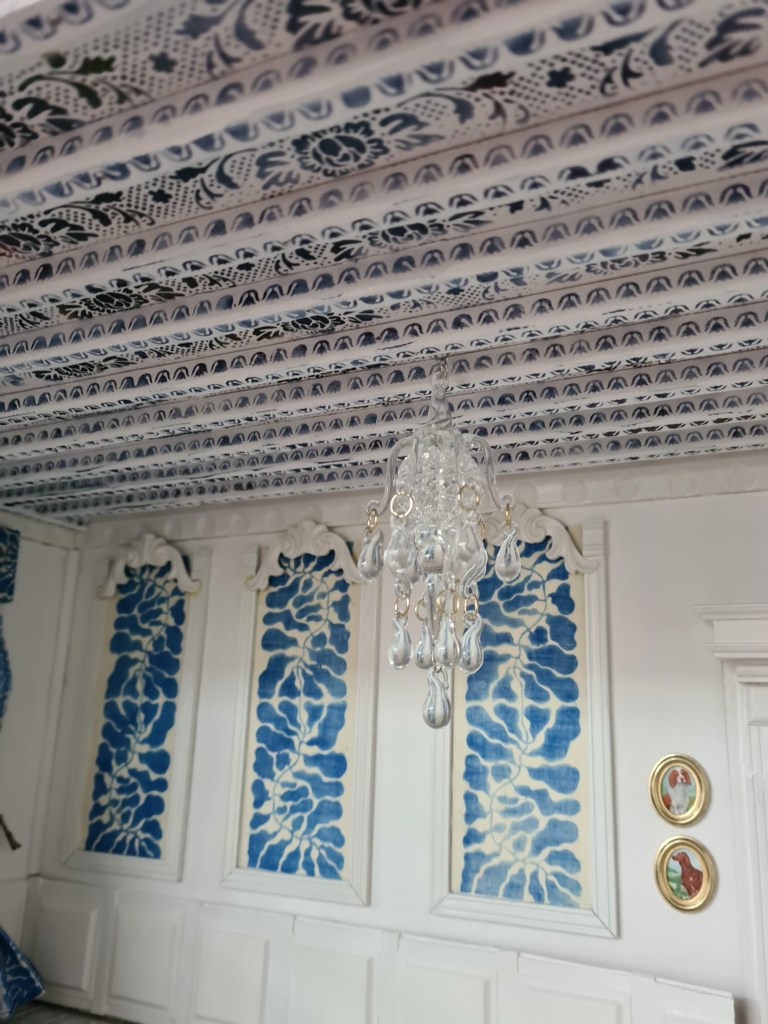
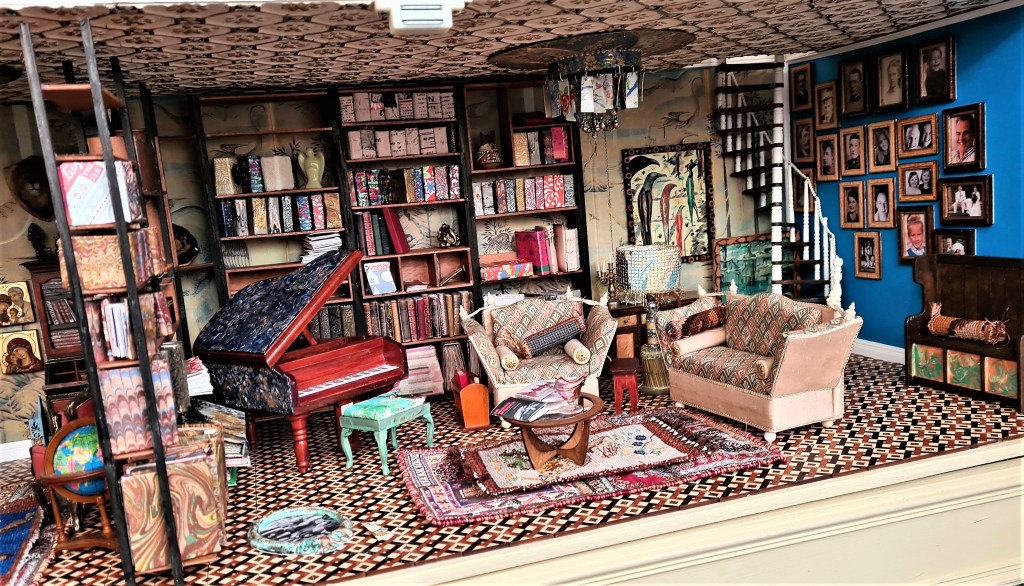
For those of us who are artists, a dolls’ house combines many aspects. It allows us to use our artistic skill-set to their fullest extent. It challenges us to create on a minute scale. To paint, print, etch, book-bind, micro-mosaic, clothe, decorate within the confines of a small space. My dolls’ house has become a vehicle for my artistic talents. I have my own permanent gallery on display when and how I choose. I open the doors of my dolls’ house. I see my own reflection looking back in all its order and perfection. It’s just as I would have it.
Due to the scale I am also able to tackle tasks which on a human scale I might find difficult. Within the confines of my small walls, I can hang wallpaper. I can make furniture and marquetry floors. I can cut ceramic and wooden tiles and print material. I can also make curtains. These are things that on a larger scale I would not feel as competent achieving. The adult version of a dolls’ house is exquisite and fragile. Thus, dealing with miniatures requires great attention to the objects. You need intensive awareness of bodily movement. You have to use tweezers to pick items up. Precision and patience become important.
Lest we forget, the creation of a doll’s house is not just the vision and skill of the perceived. Many others contribute their passion and talents. Their contributions are essential to transform what is essentially a wooden box into something magical and special. Here to in Bloomsbury House there are many others upon whose talents I have relied. This document I hope also pays tribute to their contributions.
No matter your reason for your passion for the dolls’ house – do enjoy!
Happy – Arting!

 Sarah's Art Diary