
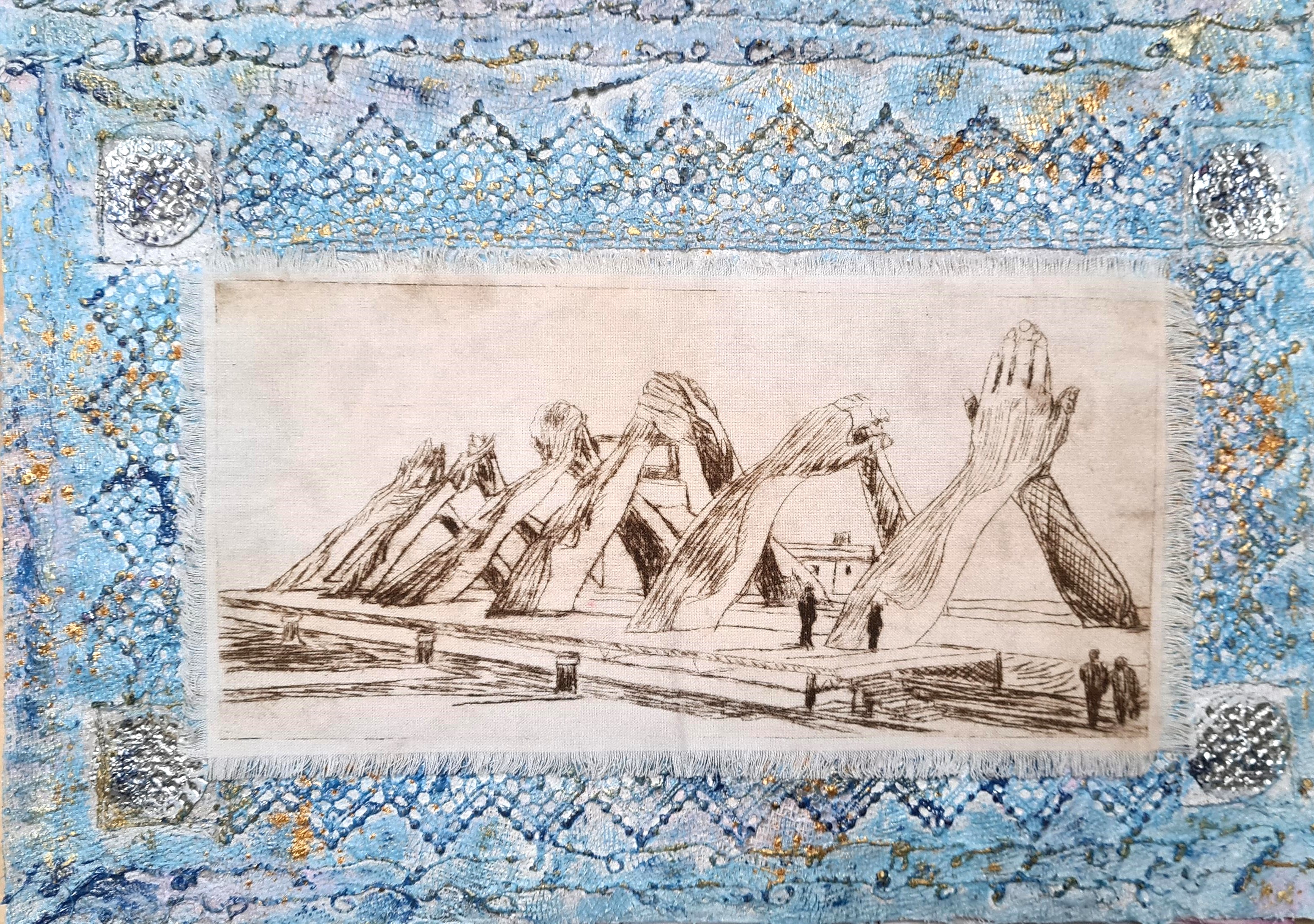
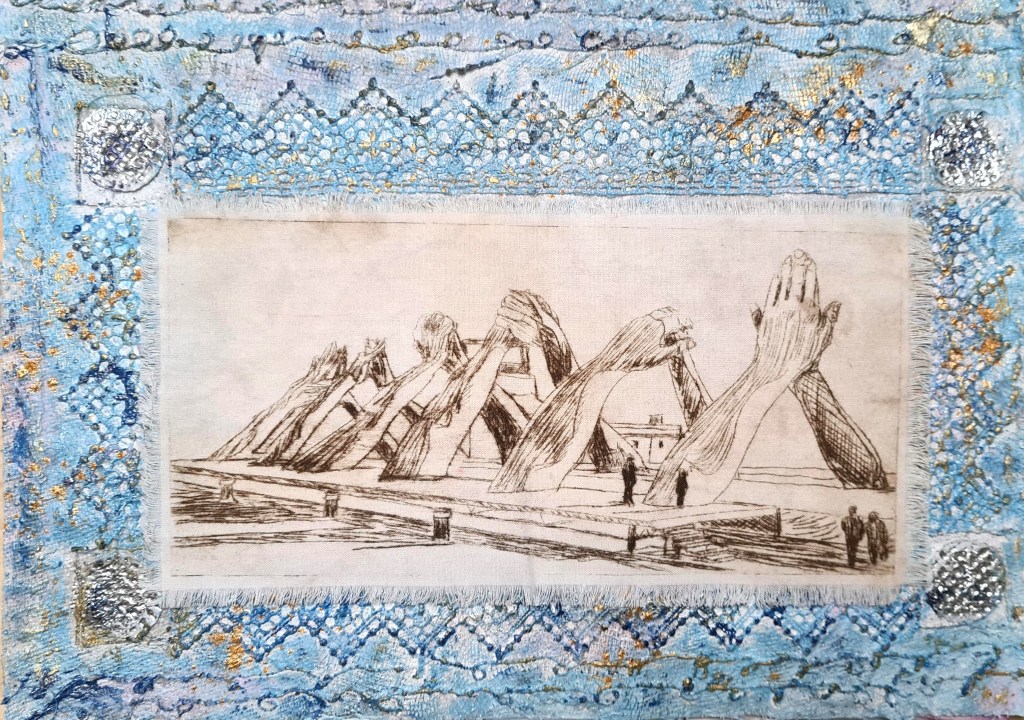
Here is an Etch of the famous Hands Over Venice bridge, in Venice. This is a description of how this piece was made with its handmade frame.
- Preparing the surface
- Cut a piece of interlining large enough for your art work.
- Begin by stiffening the interlining. To do this mix 2 litres of water with 2 cups of PVA glue in a bucket. Prepare a large sheet of fabric so that you can use this for future projects. Put the interlining in a bucket and soak it thoroughly in the glue solution.
- Wring out and hang out to dry overnight. Do not flatten but allow to dry wrinkled. This will add to the texture of the piece.
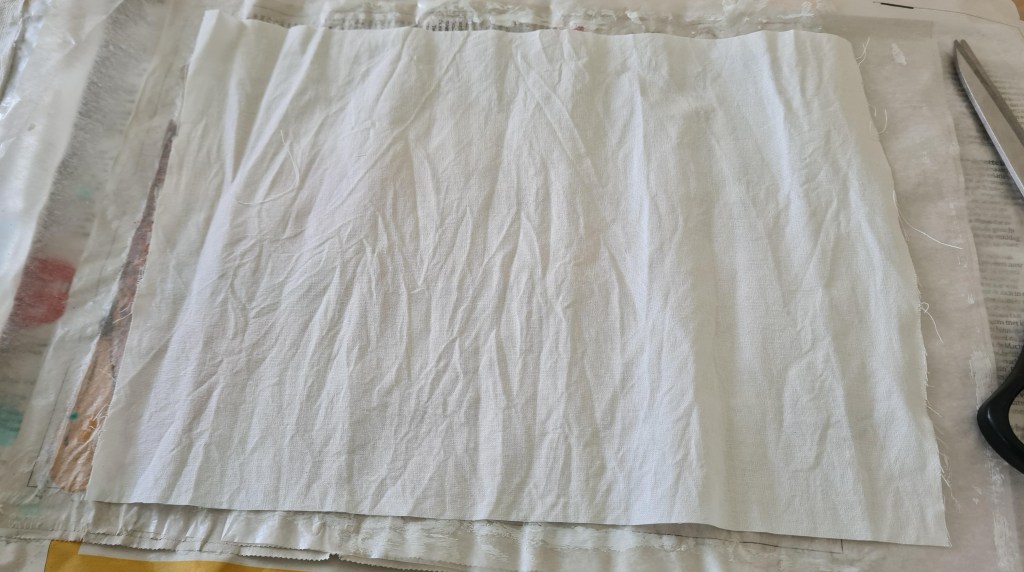
- Iron a piece of interlining flat and cut to size.
- Prepare the surface for stitching by preparing a second thin solution of PVA and water. About one tablespoon of PVA to half a cup of water.
- Tear pieces of soft tissue paper into rough strips and glue to the fabric surface with a paint brush until the surface is covered. Screw up the strips of tissue paper to add more texture to the piece.
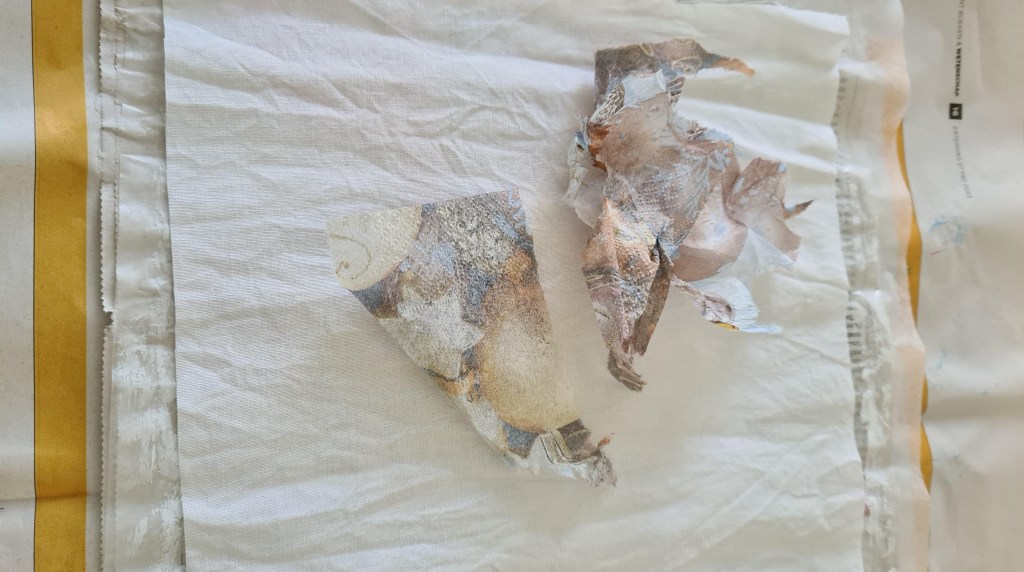
- Wet the interlining with the PVA solution and lay the strips of tissue on top and adhere them using more of the PVA solution. Also add rough strips of scrim and lace to create even more texture. Repeat the cutting, wetting and placing process and leave the piece to dry overnight.
- Once dry you can stitch the elements together using a sewing machine as well as adding additional stitches (e.g. cable stitch, corded whip stitch, vermicelli cable stitch etc.) and embroidery elements. You can also add hand embroidery if you wish. Stitching ensures that everything stays where it should.
- When you are finished and satisfied with the surface apply gesso to the surface to seal the surface ready for painting. Work gesso across the whole surface. This will ensure that when you come to apply the watery acrylic the paint will run on the surface and fall into all the nooks and crannies that have been created. Again allow the piece to dry overnight. I created this piece to act as a frame for a piece of art work (etch) which will form the central piece.
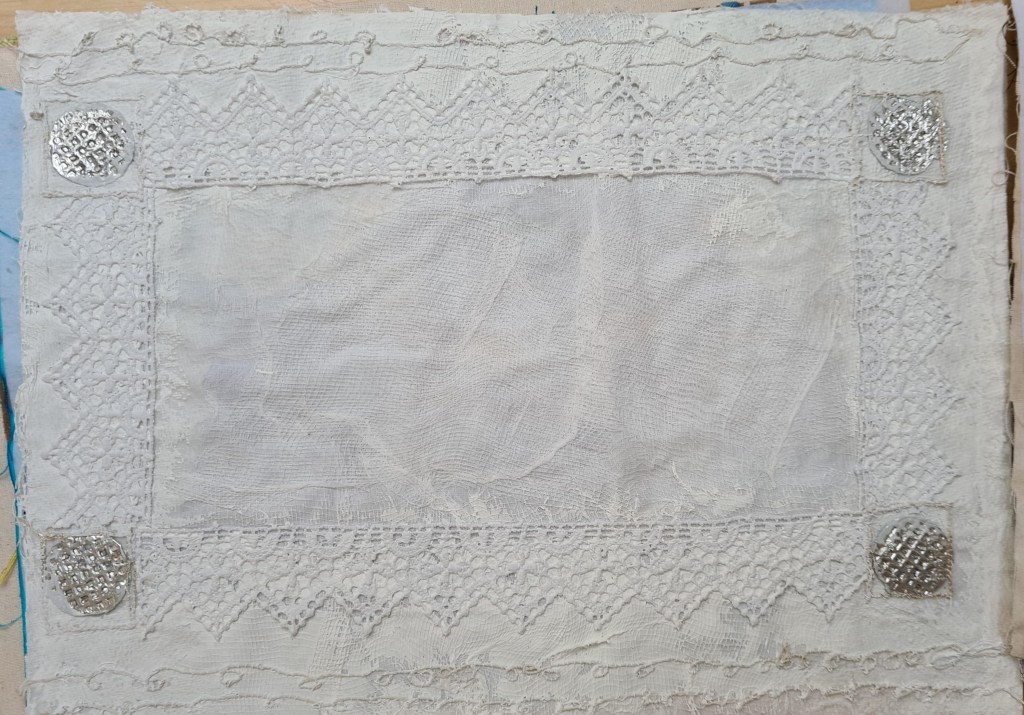
- Then you’re ready to add the paint. Use Acrylic paints. Protect your surface before you begin. Use a large paint brush to re-wet the canvas and choose your colours. You can use your surface as a canvas to paint a picture on. Here I have chosen to create a frame for my art work which will sit in the central panel.
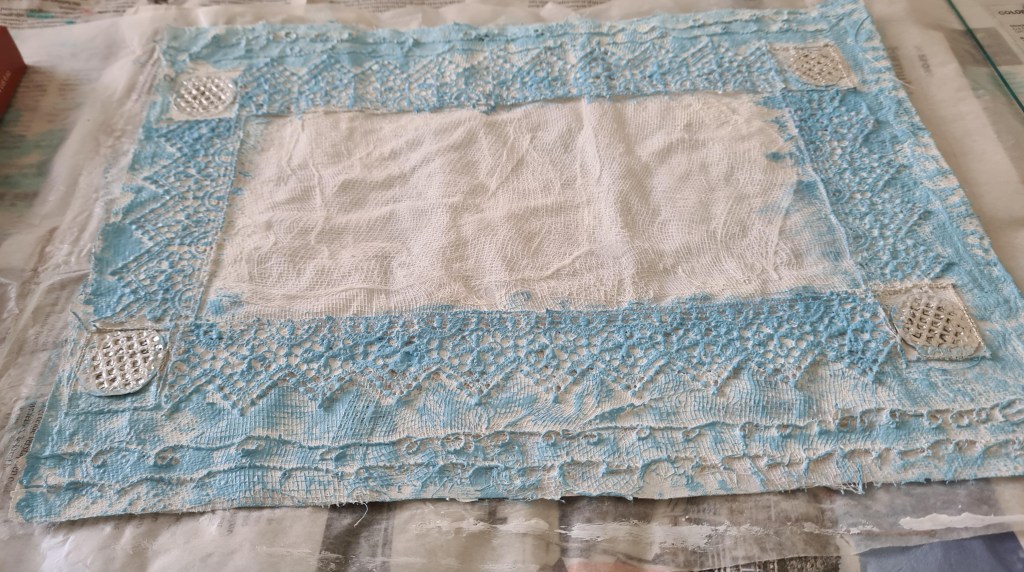
- Once you have finished painting the surface, allow to dry.
- Now begins the process of creating the insert for the frame. On this occasion I decided to create a dry point etch of the six pairs of 15-meter-high hands which form an arched bridge over a Venetian waterway in Venice, Italy. The hands embody the universal values of wisdom, hope, help, faith, friendship and love. In their union they stand for the human ability to overcome barriers and to act together. At almost 50 feet high and 65 feet wide, Building Bridges was a stunning addition to the city as part of the Venice Biennale in 2019.
- This image will create my central panel for this piece. In order to create this piece I had to first draw and create a dry point etch of the image which I went on to print onto a piece of calico fabric which I first died in cold strong tea and left to dry. When it was almost dry I printed the image onto the fabric using oil based inks.
- The image was then cut to the right size and the edges of the fabric frayed and then the piece was sewn into the central panel. This art work forms one page of a textile journal of Venice.
HAPPY -ARTING!

 Sarah's Art Diary