
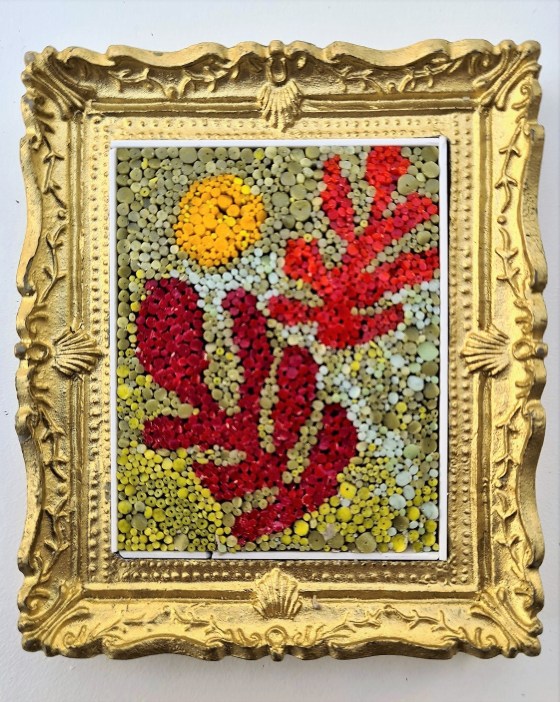
The Miniature Mosaics in my Bloomsbury House Dollhouse
Happy Art-ing! Sarah-Alice Miles
The Miniature Mosaics in my Bloomsbury House Dollhouse
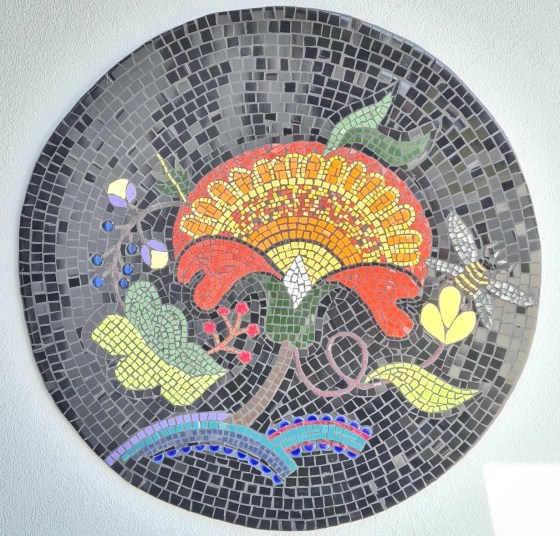
A vibrant mosaic artwork is centrally positioned within the frame, displaying an ornate floral design. The artwork is circular, with a border composed of small, dark gray, rectangular tiles. The central design features a large, stylized flower in shades of orange, red, and yellow, with a white center and detailed, petal-like structures. Surrounding the main flower are various botanical elements, including green leaves, blue berries, small yellow flowers, and a detailed insect that resembles a dragonfly or a bee. These elements are rendered in shades of green, yellow, and blue, creating a vibrant contrast against the dark background.
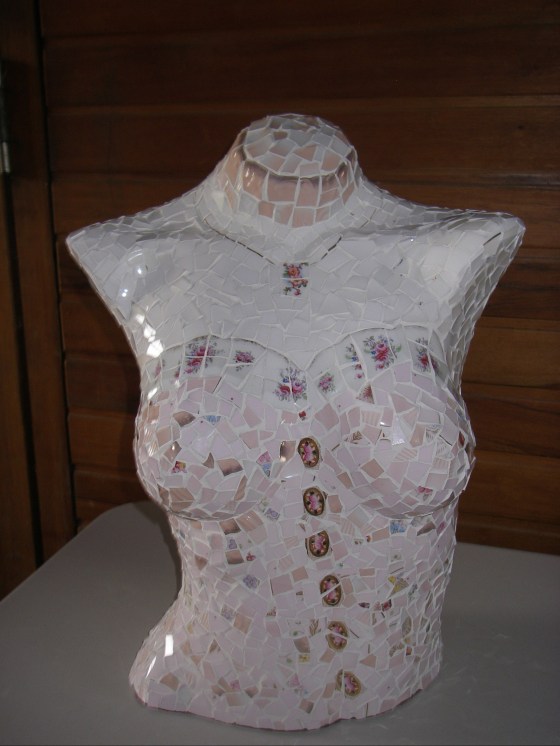
Grouting is a far more time consuming process than one might imagine, particularly if you are using fine bone china. The reason for this is that the surface is not flat and therefore special attention must be paid to removing all grout from around each shard, so that each piece can be seen clearly.
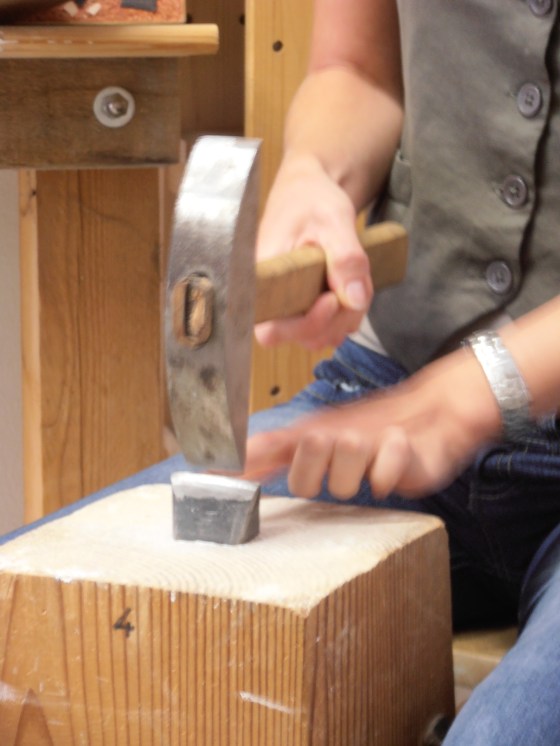
Three methods of cutting smalti are most common: nippers, hammer and hardie, or chopping machine. Wheeled nippers are pliers … More
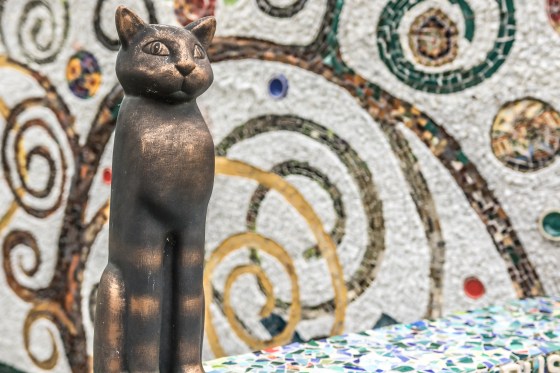
I managed to get this far and only sliced my finger once – not bad going considering I have cut up kilos and kilos of marble.I’m original mosaicing tools in the form of a hammer and hardy. More on that in another blog. These tools are usually used for cutting glass and you only have to tap the glass with the hammer and it breaks perfectly. Cutting marble is another story. Sometimes the pieces I’m cutting are 10 centimeters thick and really require some serious force, needless to say the hammer gets blunt quickly.
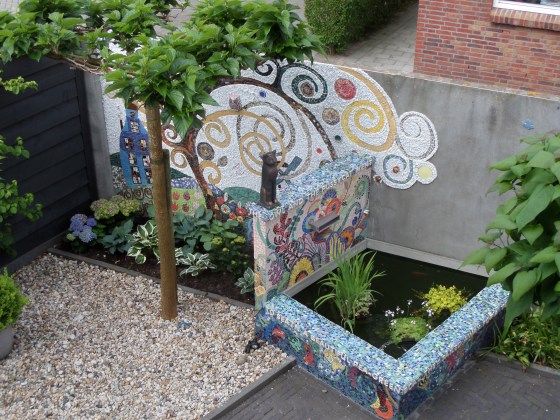
I had a wall in my backyard in the Netherlands, which my neighbors called the Berlin Wall. I must say … More
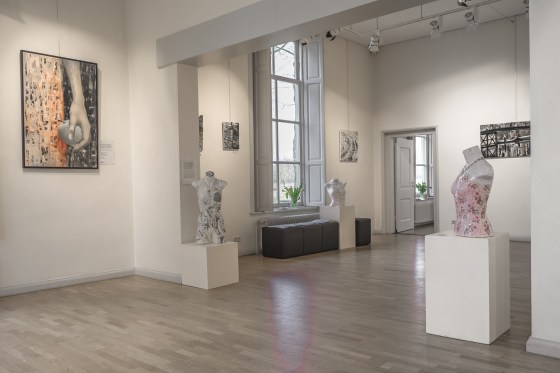
First Exhibit in the Netherlands.

Inspiration for mosaics design comes for me from material choice – the only limiting factor is your imagination and in … More
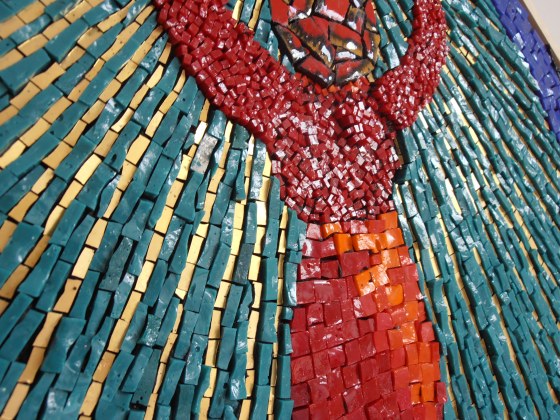
Finding Yourself Through Art
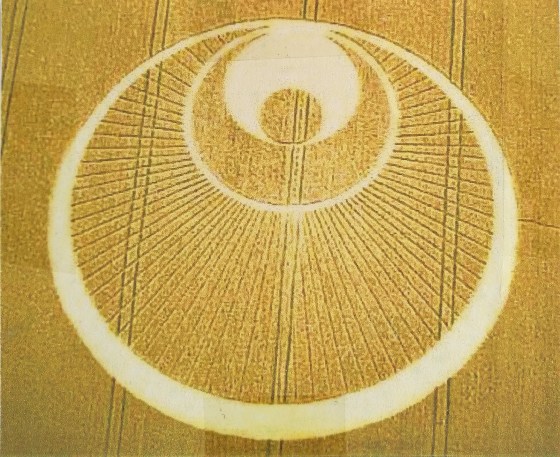
Here are the results of my thought process:. As you can see I began playing with a variety of blues and gold and began to think about how I would create the lines in the design and whether or not I wanted a border and whether that border should be black.

Many a mosaic I have ruined choosing the wrong grout color. The rule of thumb is that the more contrasting the grout color the more visible and fragmented a piece will look.
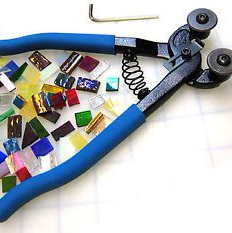
The literal translation of pique assiette from French is ‘thief of plates’ or ‘freeloader’. Raymond Isidore (1900-1964) is perhaps best known as the king of pique assiette. His entire home is covered in bits of pottery he found in the fields around Chartre, France. His neighbors called him ‘pique assiette’ as a derogatory term and it has remained in use more generally today.
 Sarah's Art Diary